Golden Ax II in ten minutes: reverse engineering as a programming warm-up
Before I went to bed, I challenged myself: can I reverse-engineer a Golden Ax II-style playable demo in fifteen minutes? The result came in ten.

Before I went to sleep, I challenged myself:
Will I be able to AI reverse engineer Golden Ax II in fifteen minutes as a playable demo?
The result?
The AI did it in ten minutes.
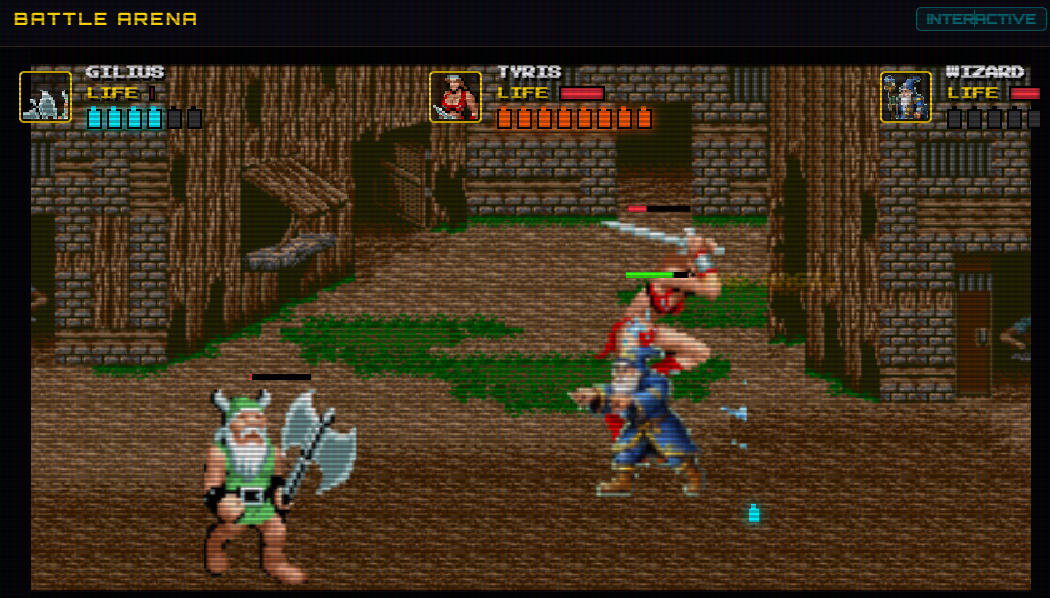
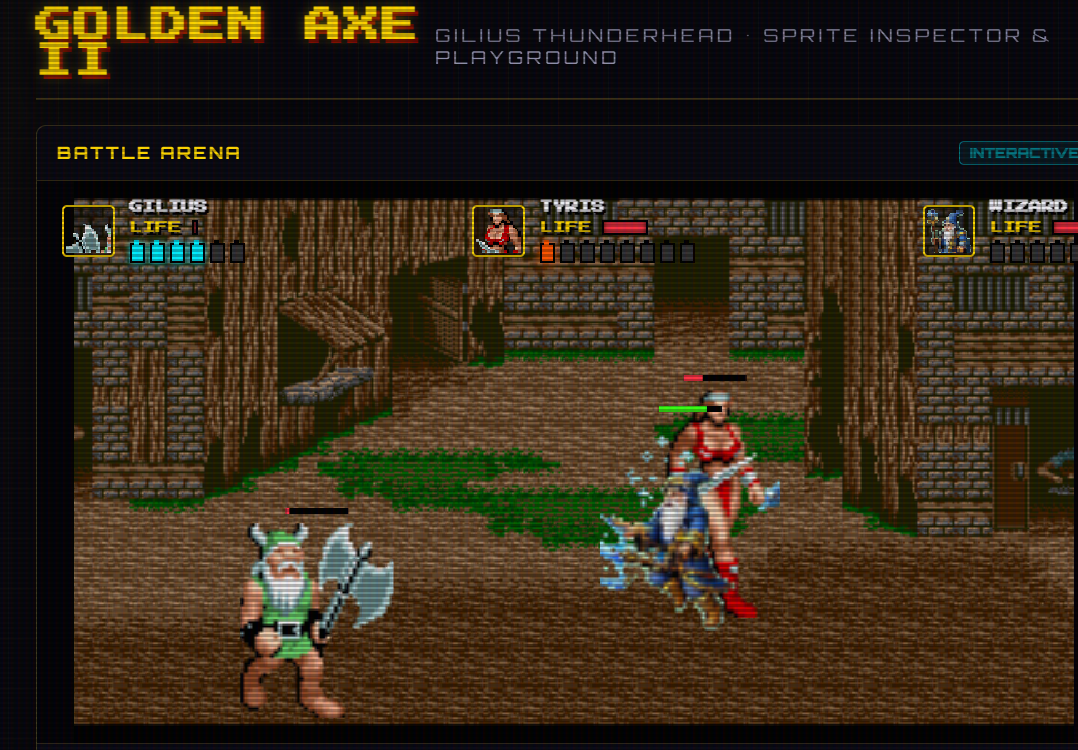
Not as a finished game. Not as a production build. But as a functional playground in which the character moves, you can test the arena, animations, hits, positions, attacks and the basic logic of a beat 'em up game in the style of old hacker classics.
How it went
Someone immediately asked on Facebook: "And how exactly did it go?"
Approximately like this: fifteen minutes of work in Antigravity, a few clear commands, a little description of what the engine should do, and the editor was born.
It wasn't about copying the old game pixel by pixel. It was a programming exercise: break down the principle, understand rhythm, cameras, sprites, hitboxes, animations and the basic feeling of movement. And then build your own mini engine that is inspired by it.
That's what's fascinating about today's AI. When you know what you want, the prototype appears almost faster than you can lose motivation.
Then came the magician
After the basic demo, I added my own wizard character.
It didn't take ten minutes, but almost an hour. And that is an important difference.
A rapid prototype is one thing. The custom character, sprites, animations, attacks, magic, effects, tuning and feel of the game are in a different league. That's where a programmer's quickie starts to become a real design.
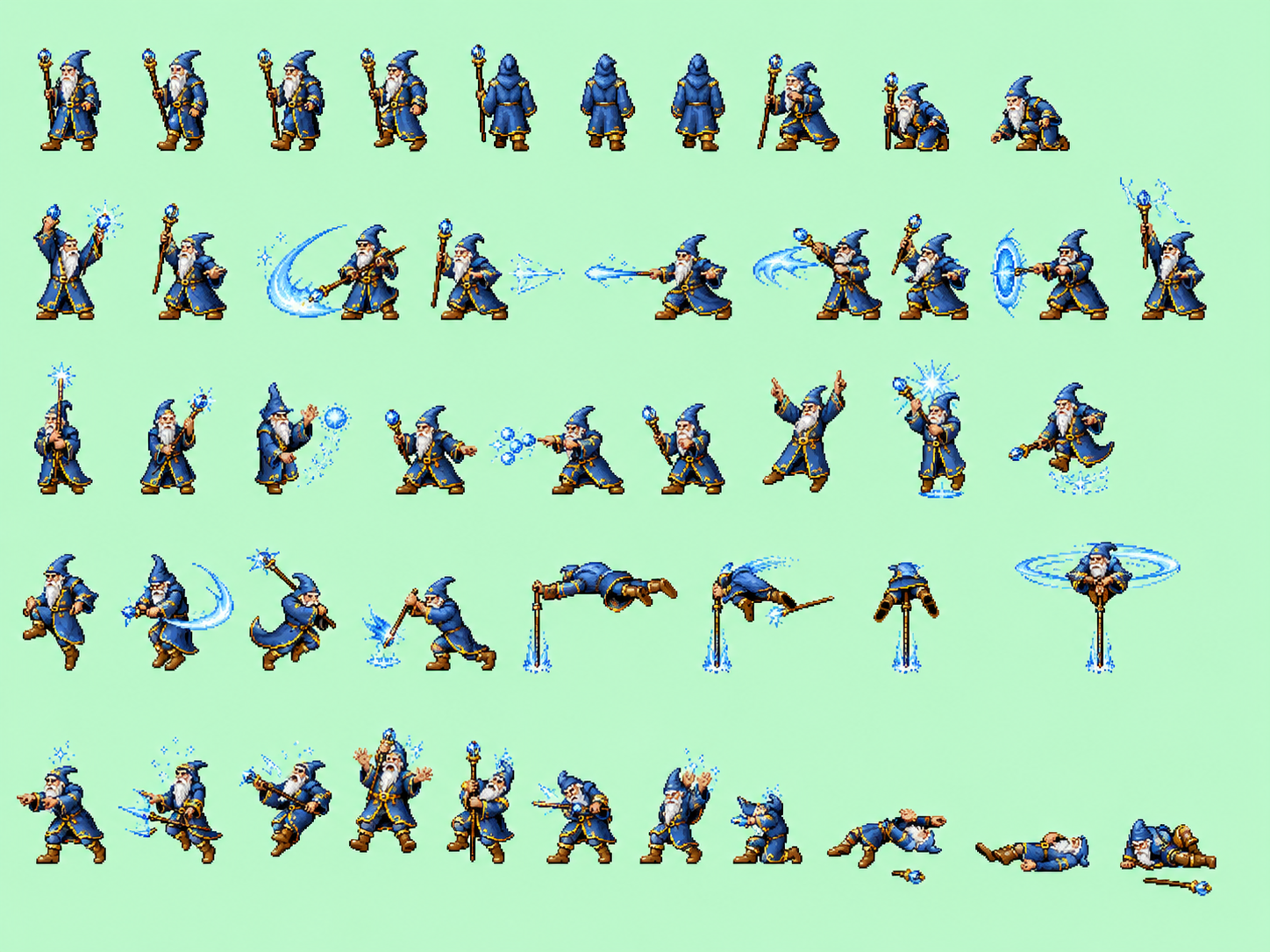
Here you can see the boundaries of the current vibe coding beautifully.
Building a basic functional thing is very fast these days. Making it into a game that people will want to play for more than a few minutes is still a work in progress. It's just that the work has shifted. Spend less time fighting boilerplate and more time what the game is supposed to be.
Sega game for the weekend?
I think today there is no major problem to make a simple game in the style of nineties Sega classics from scratch in a weekend.
Not a AAA game. Not a perfectly balanced title. But a playable, visually understandable, stylish thing that has characters, environments, attacks, enemies, sound, a few screens and a clear idea.
Paradoxically, I feel that 80% of the time would not be spent programming.
It would take him thinking up the story, the characters, the pacing, the rules, the enemies, the atmosphere, and why anyone should keep coming back to it.
What follows from this
I enjoy this experiment mainly as proof that creative programming is returning to its original joy.
One does not have to start with infrastructure month. They don't have to choose an engine first, study the documentation and give up on importing assets. It can start with the question:
How about I build my own little Golden Ax tonight?
And in a moment he has the answer on the screen.
That doesn't mean it's done. It means the game came into existence early enough to start provoking you with more ideas.
The video of the experiment is here: facebook.com/reel/1731268451196601
And yes: it is still true that the greatest limit today is not syntax.
The biggest limit is imagination.