AI in real estate: Does it help sell or create shiny lies?
After an interview for TV Prima with Laura Doubková, I return to the question of where useful AI visualization ends in reality and where deception of the buyer begins.

Today I heard from TV Prima editor Laura Doubková. The topic was simple and at the same time quite explosive: artificial intelligence in realities.
Is AI helping people imagine better living, or is it turning real estate into shiny lies?
You are choosing a new home and come across an ad with perfect photos. The apartment is sunny, modernly furnished, the walls shine with cleanliness and everything looks like something from a catalog. But what if a large part of what you see doesn't exist at all?
Artificial intelligence is changing the real estate market very quickly today. On the one hand, it can help buyers visualize the potential of an empty or neglected space. On the other hand, it can create a very convincing digital illusion: an apartment that looks like it has been renovated in the photo, even though in reality it has mold, cracks, old floors or damaged equipment.
This is where the crucial question arises: where does useful visualization end and where does deception begin?
"Artificial intelligence is a double-edged sword in this. It can deceive consumers and conceal things that they should definitely see, for example, there is mold at home. But at the same time, it can train people's imagination before renovation and show them how they could equip the property," I said to Prima today.
The report should appear today on TV Prima. And since only a short clip can fit on TV, I'm giving a longer version of the whole idea here.
What AI can do with a real estate photo today
Today's AI tools are no longer just Instagram filters. It can lighten a dark room, adjust colors, align perspective, remove clutter, change the sky to blue, add furniture or completely change the interior style.
An empty room can be transformed into a modern living room in a few seconds. Scandinavian interior from an old kitchen. From the hut visualization of a cozy holiday cottage. And from an uncomfortable apartment, something that at first glance looks like it has been renovated.
Technically, it is not difficult today. For one photo, we are talking about tens of seconds to several minutes. For a whole set of photos, it can be a moment's work, not days. Real estate AI tools commonly offer virtual staging, interior modifications, object removal, or new equipment designs.
"Today, a person takes a photo, specifies that they want a light renovation, and AI shows them in a moment what the space could look like. It can estimate what would need to be modified, in what order, and perhaps even roughly for how much."
When AI helps
The use of AI in real estate may not automatically be a problem. On the contrary, it can be very useful.
When buyers see an empty room, they often cannot imagine how it could function as a living room, bedroom or children's room. AI can help him better understand the potential of the space. It can also show how the apartment would look after reconstruction, with a different floor, a new kitchen or more modern equipment.
This is fair use of AI if it is clearly marked.
It is ideal to show the original photo and next to it a digital visualization. One then knows: this is the current state and this is a possibility of how the space could look.
AI thus functions as a tool of imagination. It helps people see the potential of a place, not obscure its reality.
You can practically try it out in Hyperprostor as well. At the address hyper.alphai.cz there is a lounge Chytrá rekonstrukce & bydlení and in it a bot DigiRekonstruktér. Just show him a photo of the space and ask him to suggest a lighter or more significant renovation, describe the possible steps and help imagine what could be done with the place.
A shack, a fix, and an Airbnb dream
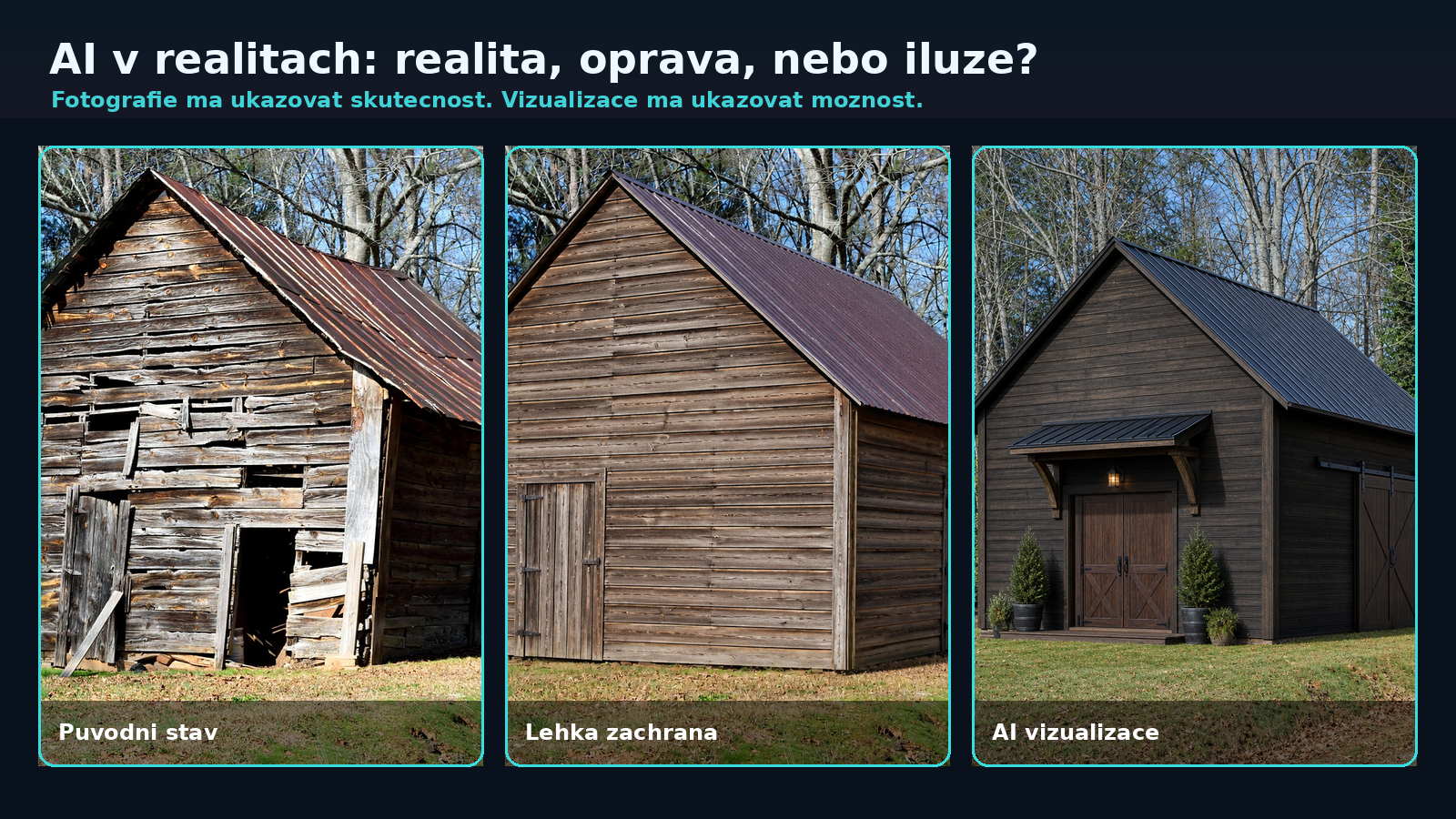
Here you can clearly see the difference between reality, careful correction and great visualization.
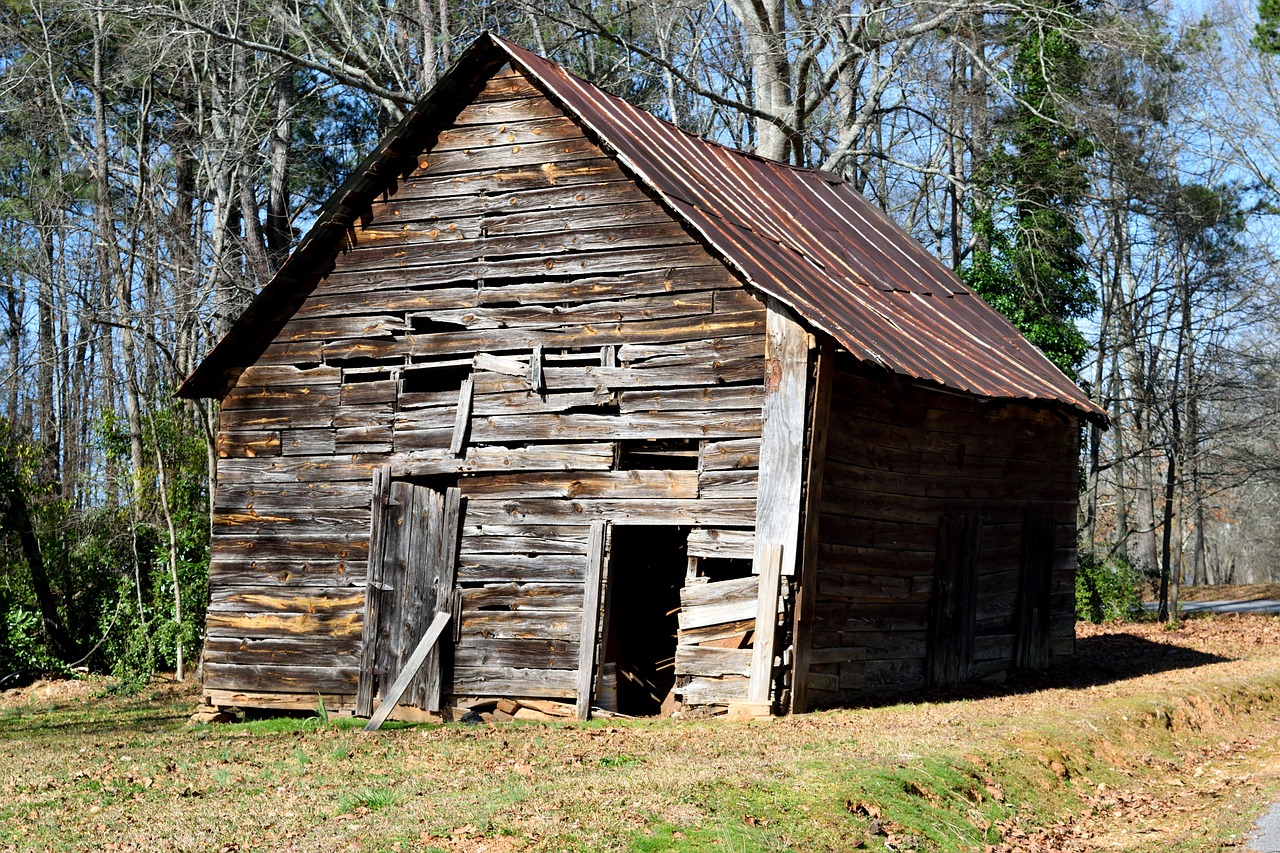
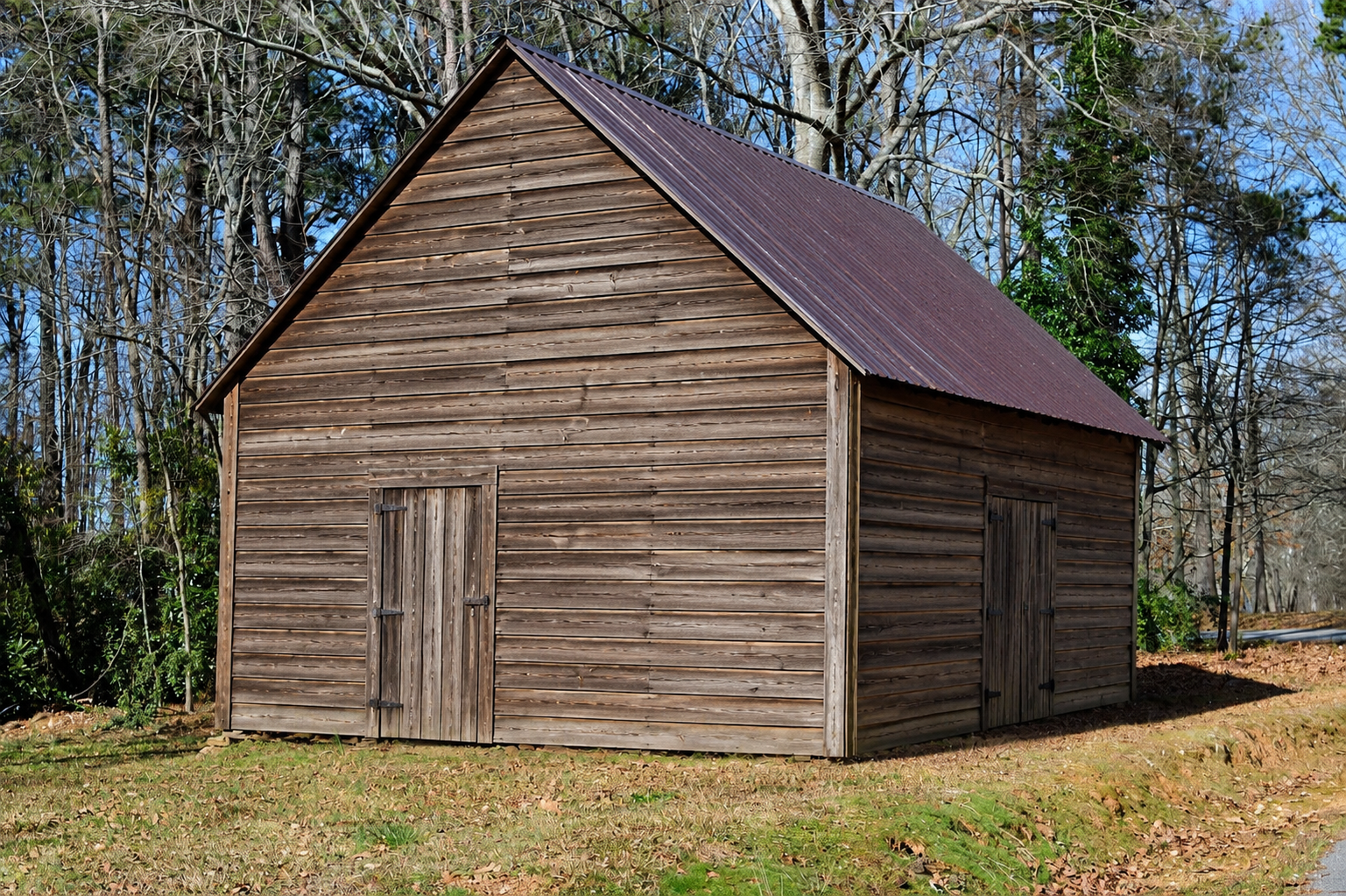
The first picture shows the original condition. The other is a cheap save: same angle, same trees, same sky, same road in the background. Fallen boards are replaced, doors are straightened, the biggest holes are patched and the surroundings are cleaned up a bit. It is not a reconstruction of dreams. More so that it doesn't fall.
The third picture is already a premium idea. New dark roof, new wood paneling, solid doors, sliding doors, light above the entrance and a few plants. The shack suddenly becomes a cottage, which in the photo could look like a romantic weekend escape.

According to a rough estimate, such a premium conversion could cost approximately 320 to 530 thousand crowns. It depends on the size of the building, the region, the statics, the roof, the quality of the cladding and how much work a person can do on their own.
This is useful. AI doesn't say "this is what the property looks like". He says "this is what she might look like one day". And there is a fundamental difference between the two.
When does AI start lying?
The problem arises when AI does not show the possibility, but replaces the fact.
If artificial intelligence removes old furniture from a photo, it can be understood as virtual staging, if it is marked. But if it removes mold, moisture, cracks, damaged plaster, old wiring or any other significant defect, we are in a completely different situation.
The defect disappears in the photo. But he remains in the real apartment.
"This already violates the principle of consumer protection in my opinion. Typically, it's exactly the mold, scratched things and defects that are covered up by it. The correct practice is to put a before and after photo next to each other and clearly state that it is a digital reconstruction."
And that is the crux of the problem. It is not about the reconstruction of an apartment, but about the reconstruction of a photograph. The buyer then does not go on a tour of the actual property. He goes on a tour of the digital promise.
It's even more sensitive with mold, because it's not just about aesthetics. Mold can be related to humidity, poor insulation, the technical condition of the house and health risks. If someone hides it in the photo, it not only beautifies the apartment. Withholds essential information.
Kitchen as real estate catfishing
You can see it even more clearly in the kitchen.
The first picture is the harsh reality: dirt, damaged walls, old equipment and places that the buyer should definitely see. The second image is a cleaner and more factual version of a possible fix. The third is already a pleasant real estate dream, in addition with the atmosphere of a lifestyle advertisement.
In English, the analogy with the word catfishing is used for a similar phenomenon. Originally, it was mainly about dating sites, where a person shows a significantly improved or false image of himself, and during a personal meeting it turns out that the reality is different.
Real estate is sometimes referred to as housefishing. The photo in the ad creates an attractive image that does not correspond to reality. The buyer comes to the inspection and discovers that the apartment is darker, more neglected, smaller or technically worse than the photos indicated.
"It started a lot on dating sites, where people made themselves more beautiful in photos. Then came the face-to-face meeting, and it turned out that the reality does not match the photo. It's the same with real estate. It sells tinsel, which can greatly distort expectations."
How can a common man defend himself
It's getting harder and harder to recognize AI editing with the naked eye. Still, there are a few warning signs.
Follow the light. If there is one window in the room, but the light seems to come from multiple directions or even from the walls, something may not be right. Notice shadows, reflections in mirrors, windows, door handles, furniture edges, carpets, and transitions between floor and wall.
Surfaces that are too perfect can also be suspicious. Reality has minor imperfections: prints, smudges, material structure, dust and wear. AI sometimes creates an unnaturally smooth catalog world with no traces of ordinary life.
But the best defense is not detective work. It is best to ask for original photos, clearly labeled visualizations, a floor plan, and ideally a live video tour.
The buyer is not supposed to be a detective. He doesn't have to guess if the shadows are right or if the wall surface is suspiciously perfect. A fair market is supposed to stand on simple transparency.
Metadata, the AI Act, and California
In the future, metadata and standards such as C2PA and Content Credentials will be important. Simply put, it's a digital nutritional chart of an image that can show where the file came from and how it was edited.
At the same time, the big players are introducing systems like SynthID, which try to embed origin signals into AI content. It's a useful direction, but it's not a miracle protection. Metadata can be lost during web upload, compression, screenshot or further processing.
In Europe, another layer of rules is coming. The AI Act in Article 50 addresses transparency obligations for AI generated or manipulated content. These obligations are to be fully applicable from 2. August 2026.
An interesting example also comes from California. Act AB 723, effective 1. January 2026, requires the identification and availability of the original unedited version or a path to it for digitally edited real estate photos. Common photographic adjustments such as light, colors or cropping should be excluded from this.
That seems like a reasonable direction to me.
There is no need to demonize common photo editing. Exposure comparison, white balance, cropping or light color correction were always done in the photo. But once the AI adds furniture, changes the floor, removes old equipment, improves the view, repairs plaster or hides a defect, it should be clearly marked.
A simple rule
The correct practice is simple:
- Show original photo.
- Show AI visualization next to it.
- Clearly state that this is a digital edit or draft of a possible state.
Such an approach protects the buyer, but in fact also the broker. Trust is key in real estate. When a person discovers that they have been lured by a false image, it damages not only the particular ad, but also the reputation of the entire office.
I would formulate the golden rule like this:
The photo should show the reality. AI visualization is supposed to show the possibility. And there must be a clear distinction between these two things.
AI can help make the dream come true and show what housing could look like. But when we use the same technology to cover up defects that the buyer has a right to see, the tool of imagination becomes a tool of deception.
And if you want to try a similar AI reconstruction yourself, open hyper.alphai.cz, enter the Chytrá rekonstrukce & bydlení lounge and try the DigiRekonstruktér. In your own photo, you'll see where AI helps the imagination and why it's so important not to mistake visualization for reality.
Resources and links
- California AB 723, rules for digitally altered real estate photographs effective January 1, 2026.
- EU AI Act, Regulation (EU) 2024/1689, Article 50 and transparency obligations for AI content.
- European Commission: AI Act, overview of the regulatory framework and applicability dates.
- C2PAand Content Credentials, standards for proving the origin and modification of digital content.
- Google DeepMind SynthID, technology for tagging AI generated content.